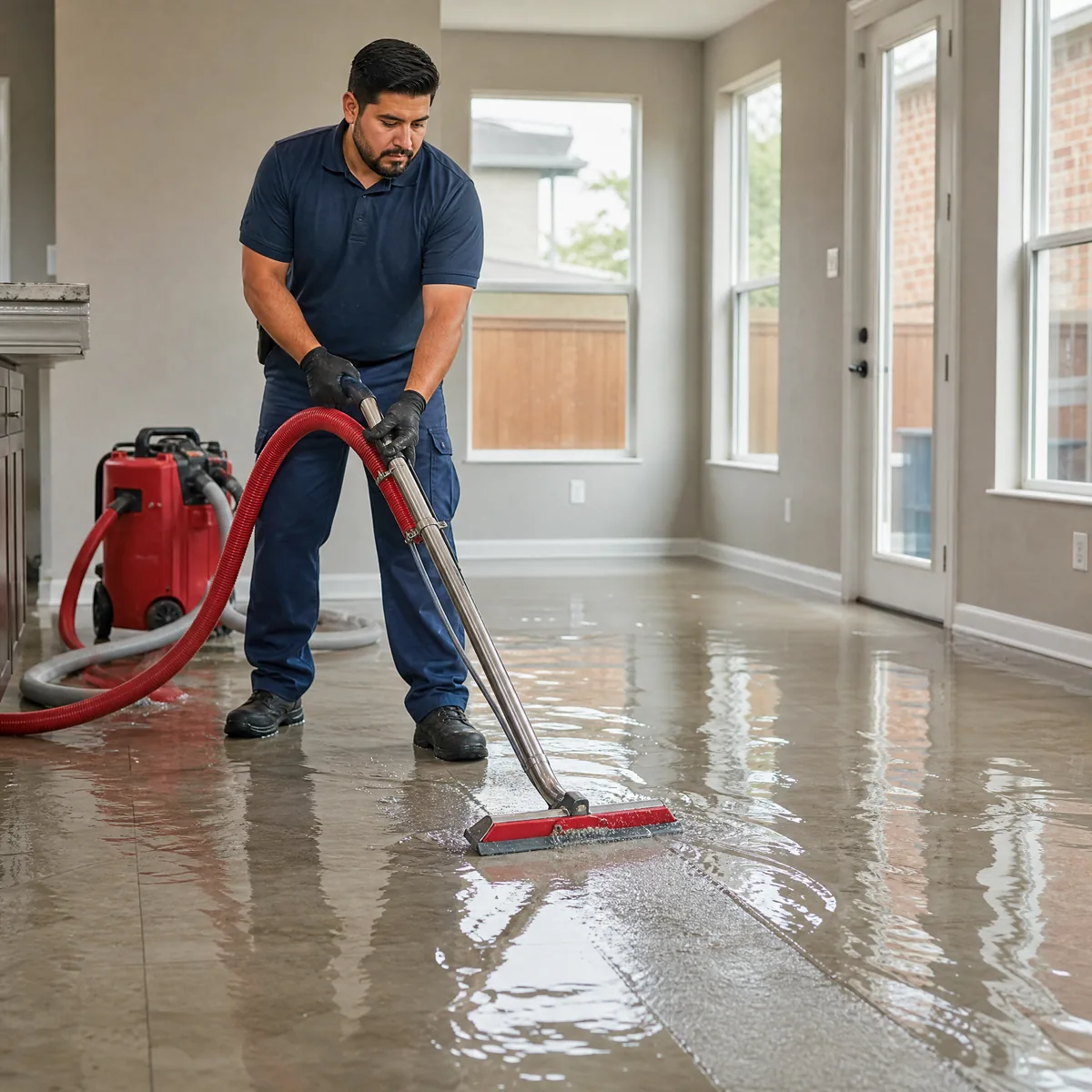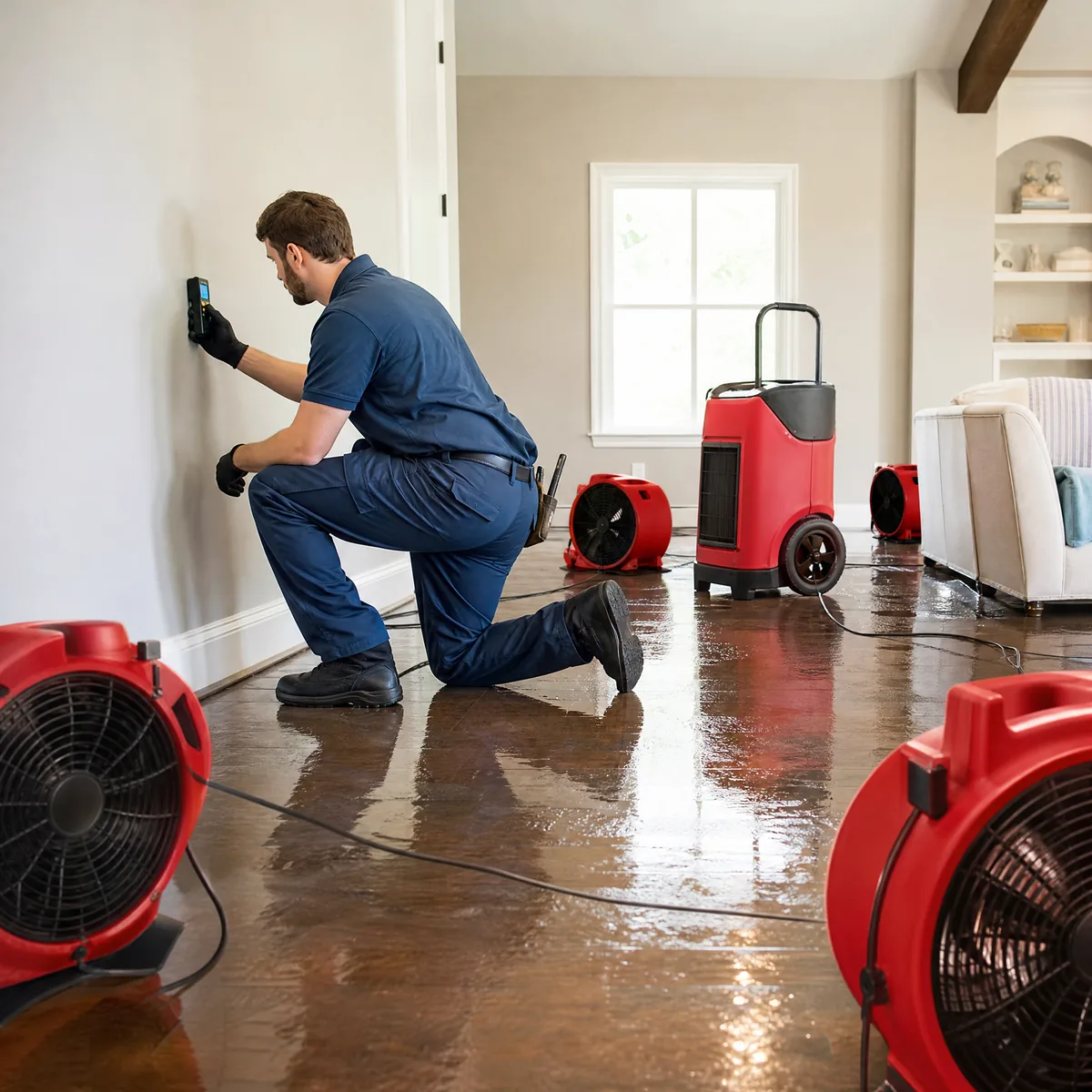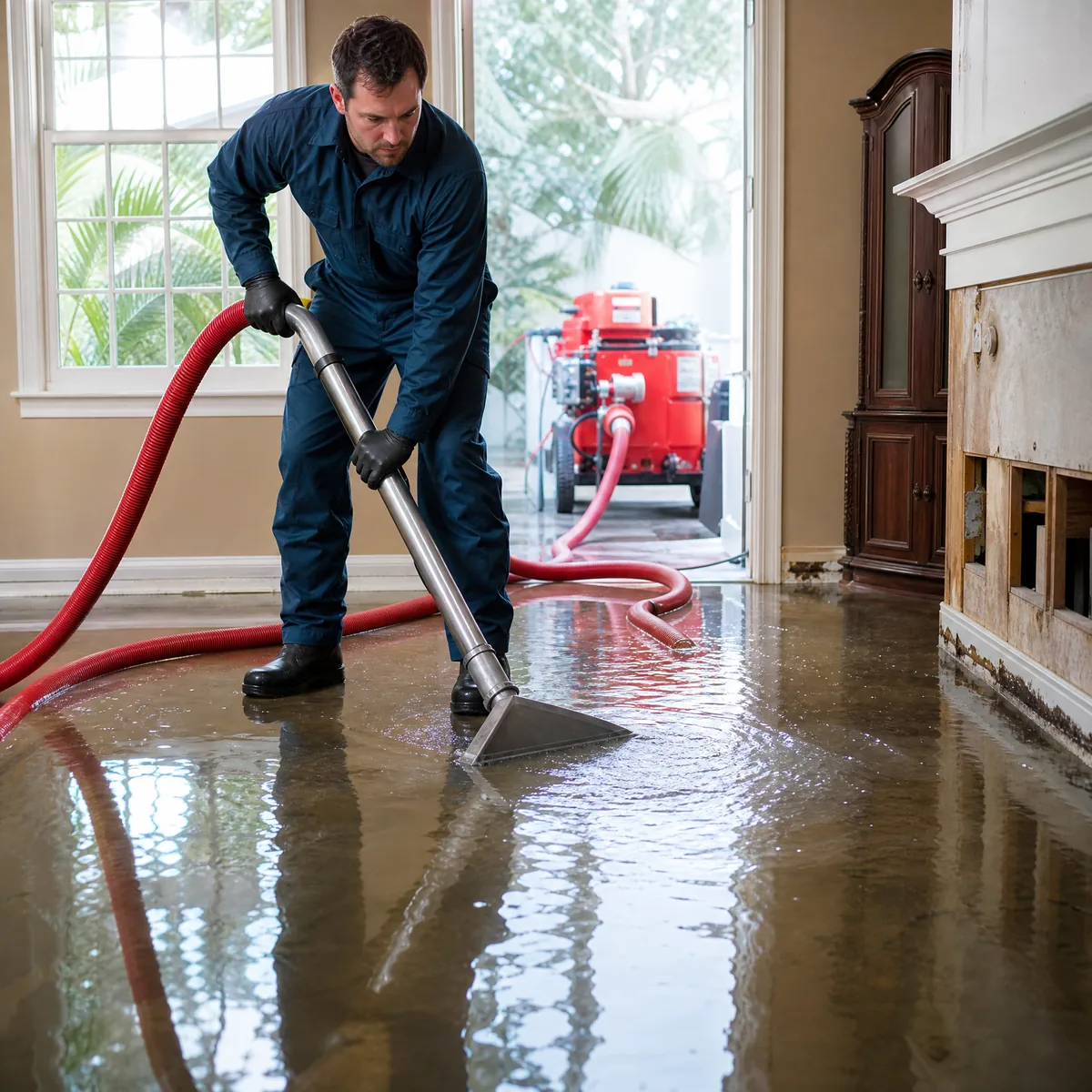
Replacing the heater does not dry the room around it
A leaking water heater can soak a utility closet, garage wall, adjoining floor, or nearby storage. Water may move under a wall into a room that initially looks unaffected. Keep clear of wet electrical components and leave equipment or gas-system work to the appropriate qualified trade.
Call to describe the Renton property, the heater location, and any repair already arranged. An independent restoration provider can discuss the water damage while a plumber or equipment specialist addresses the source.
Let the relevant trade handle utilities and the source
Depending on the system, a water heater involves plumbing and electrical or fuel connections. Do not touch wet controls, disconnect components, or step into water to operate equipment. A gas odor or other immediate danger calls for leaving the area and contacting the appropriate emergency service or utility.
The qualified technician should diagnose the source and determine disconnection, replacement, and restart. The restoration contractor's work concerns the agreed property damage. Confirm which provider handles each task so the cleanup crew is not expected to move or disconnect equipment outside its scope.
Check the path out of the utility area
For a Renton home, explain whether the heater is in a garage, a closet inside the living space, or a lower level. If the closet backs onto a bedroom or kitchen, mention damp trim or flooring nearby. The assessment should follow the water beyond the appliance footprint.
In a shared building, clarify whether the heater serves one unit or a common system. Management may need to coordinate access and responsibility. Keep the equipment replacement scope separate from extraction, drying, and repairs to the surrounding finishes.
Small leaks can be concealed for some time
A slow leak may collect behind the heater or beneath stored belongings before water becomes visible in the open room. A larger failure may spread quickly across a garage floor or under a threshold. In either case, the amount visible when you discover it does not establish how much material was affected.
Share any earlier staining, unusual dampness, or work in the same area. The contractor should distinguish the current loss from any older or unrelated condition where possible. A water-heater failure does not automatically explain every stain in the room, and the scope should reflect the actual findings.
Coordinate access behind the heater
When equipment must be removed for replacement, the exposed area may provide useful access to the wall, platform, and floor. A coordinated sequence lets the restoration provider inspect those surfaces before the new unit blocks them again. Ask the plumber and cleanup provider how they will communicate about readiness.
Do not assume that cleanup includes rebuilding a platform, repairing plumbing, or installing the replacement appliance. Identify who completes those tasks and whether any additional professional evaluation is needed. Clear sequencing can reduce the chance that newly installed equipment must be moved again for an overlooked repair.
Inspect the boundary with adjoining rooms
Garage and utility-area water can reach the base of a finished wall or move beneath a door into living space. Closets may conceal wet flooring and cabinet components. The assessment should follow those transitions rather than treat the appliance's footprint as the full extent of the loss.
Tell the provider about damp trim, swelling, lifting floor edges, or staining beyond the original room. If an upstairs installation is involved, the ceiling below may need consideration too. Ceiling water-damage cleanup explains what to communicate when the leak has reached a lower level.
Separate drying from cosmetic recovery
The scope may include extraction, contents handling, evaluation of wet finishes, and drying of suitable remaining materials. Some components may require removal if they are damaged, contaminated, or inaccessible. The provider should explain the reason and what condition they expect to confirm through the work.
Painting, trim, wall repair, and replacement flooring may be separate. Ask how progress will be monitored and what completion records are provided. A new heater standing in a tidy room does not establish that the underlying building materials have been assessed or are ready for the final finishes.
Keep a useful record after the leak
Retain the equipment diagnosis, replacement or repair invoice, cleanup scope, and any drying documentation. Record affected belongings separately where needed. If another moisture problem appears later, a clear history helps the next professional understand what was actually repaired and which materials were treated.
Call (866) 552-5141 for water-heater leak cleanup in Renton. If water is still on the floor, explain the potential need for extraction. If the first cleanup is already complete, ask about the remaining structural drying or material assessment.
Water heater leak cleanup: common questions
Can cleanup take place during heater replacement?
Does a garage leak need attention if the floor is concrete?
Is water-heater repair included in restoration?
Should I turn the heater back on after cleanup?
Help for your Renton address
See the Renton and nearby area guides for access details. Call with the full address to confirm provider coverage and current availability.